There is a recurring theme in the history of Artificial Intelligence: if you pull back the curtain on a “magical” new technology, you inevitably find a human being sweating over a keyboard.
First, it was Amazon’s “Just Walk Out” technology, which turned out to be 1,000 people in India watching security cameras and manually adding items to your cart.
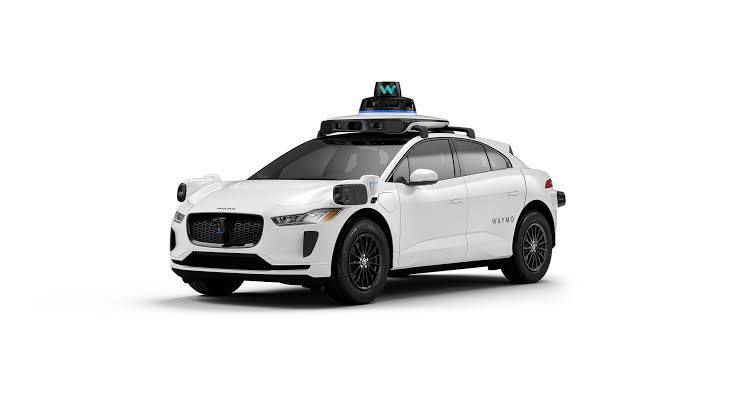
Now, it’s Waymo.
New reports (and admissions from Waymo itself) have confirmed what skeptics have suspected for years: those “fully autonomous” robotaxis navigating San Francisco’s complex streets aren’t quite as autonomous as the marketing suggests. A significant portion of their “intelligence” is actually beam-streamed from remote centers where human operators—often in lower-cost labor markets like the Philippines—are guiding the cars through tricky situations.
The stock market reacted with a shrug (Alphabet/GOOG is down ~2.5% today, but that’s just noise). But for the developer community and the broader public, this is yet another crack in the “AI is Magic” narrative.
The “Human in the Loop” Reality
To be technically fair to Waymo: these remote operators aren’t “driving” the cars in the video game sense. They aren’t holding a Logitech steering wheel and hitting the gas.
The official term is “Remote Assistance” (RA). When the car gets confused—say, by a construction cone that looks like a person, or a police officer using hand signals—it stops and pings home. A human looks at the camera feed and clicks a path: “Go around the cone on the left.” The car then executes the maneuver itself.
Waymo argues this is a safety feature. And it is.
But it also fundamentally changes the economics of the business.
If every “autonomous” ride requires 5 minutes of human attention to navigate a 20-minute trip, you haven’t invented a robot taxi. You’ve invented a very expensive remote-controlled car.
The “Mechanical Turk” Economy
This feeds into a darker narrative about the current AI boom: are we actually solving hard technical problems, or are we just finding new ways to hide low-wage labor behind an API?
- Amazon Just Walk Out: “Computer Vision” = Humans watching video.
- Customer Service AI: “Chatbots” = Humans editing responses.
- Data Labeling: “Self-Supervised Learning” = Millions of workers in the Global South drawing boxes around stop signs for pennies.
We are building a Rube Goldberg machine of labor arbitrage. We sell the service at a premium (“High Tech AI”), pay the labor at a discount (“Remote Gig Work”), and pocket the difference while telling investors we’ve solved General Intelligence.
Why This Matters for Developers
For those of us building software, this is a cautionary tale about marketing vs. architecture.
We are being sold tools and platforms that promise full automation. “Autonomous Coding Agents” that will build your app. “Self-Driving” databases. “Zero-Touch” infrastructure.
But in production, “autonomous” almost always means “autonomous until it breaks.”
The Waymo news is a reminder that edge cases are infinite. You can train a model on a trillion miles of driving data, and it will still freeze when it sees a woman in a chicken costume chasing a duck across a crosswalk (a real thing that happens in San Francisco).
Humans are the exception handlers. And until AI can handle the chicken-duck scenario without pinging Manila, we aren’t replacing humans. We’re just moving them to a call center.
The Trust Erosion
The real damage here isn’t to Waymo’s technology—which is objectively impressive—but to public trust.
We were told the cars drive themselves. They don’t. We were told the stores run themselves. They didn’t. We were told the code writes itself. It doesn’t (as my last post on AI productivity showed).
We are entering the “Trough of Disillusionment” for the 2020s AI hype cycle. The magic is wearing off, and we’re starting to see the wires.
Conclusion
Waymo is still the leader in this space. Their cars mostly drive themselves. But the dream of zero-marginal-cost transportation—where a robot taxi costs pennies because no human needs to get paid—is dead for the foreseeable future.
As long as there’s a human in the loop, the cost floor is set by human wages. And as long as we pretend otherwise, we’re just lying to ourselves.
Stock Watch: Alphabet (GOOG) sits at $323.10, down slightly. The market knows that even with human helpers, Waymo is miles ahead of Tesla. But “miles ahead” doesn’t mean “finished.”
What do you think? Is “Remote Assistance” cheating, or just smart engineering? Let me know.